
Last Updated: November 2, 2026
Quick Summary
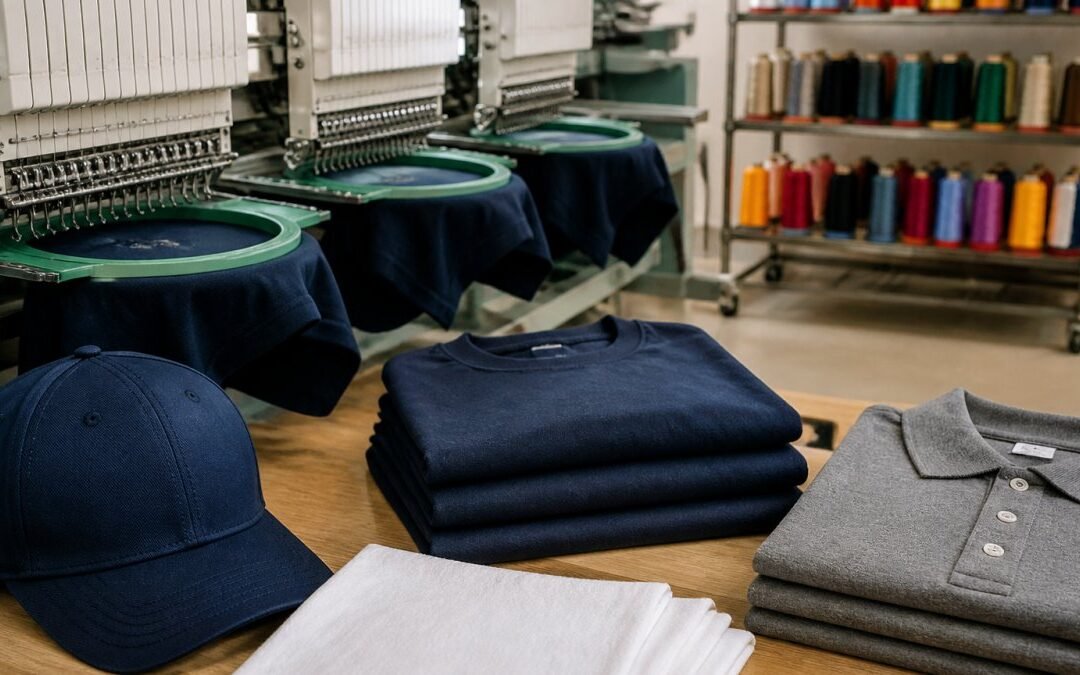
Custom embroidery services for small businesses convert your logo into a stitch file, embroider it onto garments such as uniforms, merchandise and gifts, and return finished decorated items rather than a DIY project. Pricing depends on stitch count, quantity, garment, turnaround and digitising, so request a quote for your order.
- Digitising turns your logo artwork into a stitch file the embroidery machine can read.
- Keep embroidered text at least 5mm tall and avoid lines thinner than 1mm.
- The turnaround clock starts when you approve the design proof, not at enquiry.
- Ask whether the digitising fee is one-off so reorders of the same logo avoid it.
- Promo Wear Studio is family-owned with over 26 years of experience and handles any order size.
Table of Contents
- What Small Businesses Actually Get From Custom Embroidery Services
- Embroidery Digitising: What Your Logo File Needs Before Production
- Embroidery Pricing Per Item: The Cost Drivers That Move Your Quote
- Embroidery Turnaround Time: Planning Backwards From Your Event Date
- Embroidery vs Printing for Business Apparel
- Request a Quote From Promo Wear Studio
- Frequently Asked Questions
What Small Businesses Actually Get From Custom Embroidery Services
Custom embroidery services for small businesses turn a plain garment into a walking advertisement. Embroidered branding survives the wash, looks sharp in photos and reads as professional.
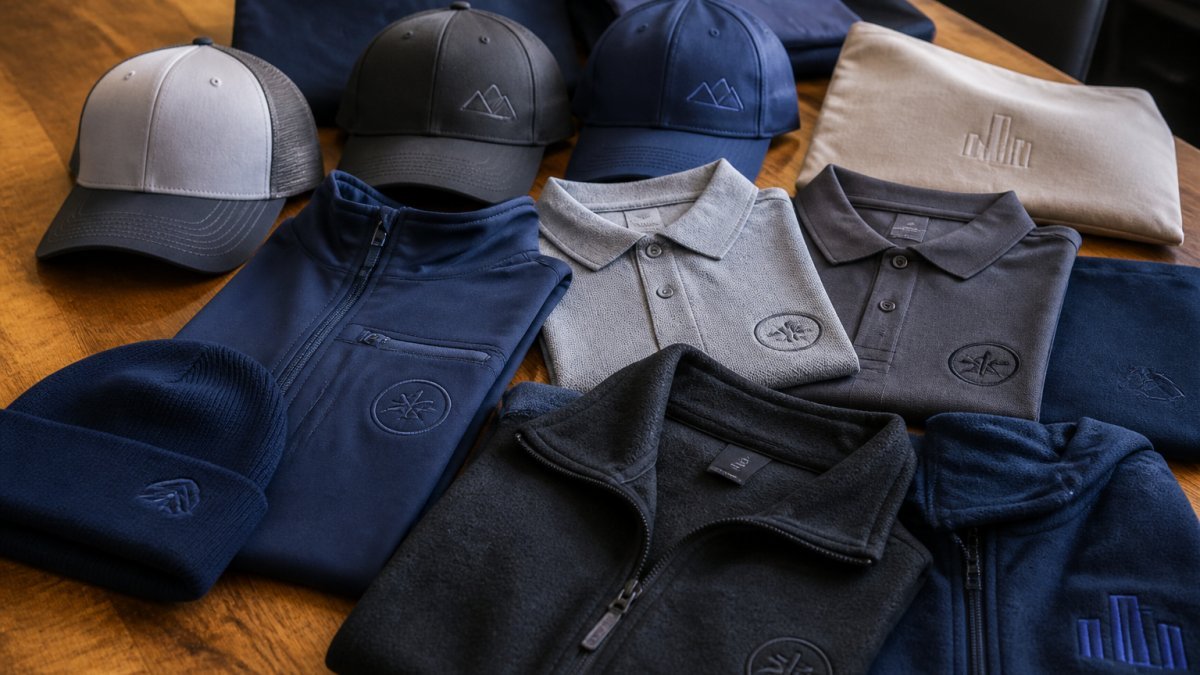
A finished, decorated garment is what you receive, not a DIY project.
Uniforms, Merchandise and Gifts: Where Embroidery Fits
Embroidery suits many kinds of apparel worn in public. If uniforms are your priority, explore uniform embroidery.
Embroidery Digitising: What Your Logo File Needs Before Production
Embroidery digitising is the process of converting your logo artwork into a stitch file that the embroidery machine can read.
This is where most first-time buyers get caught out. A logo that looks crisp on screen may have thin lines, gradients or fine text that will not survive stitching. Digitising is offered as a service; see our digitising service page.
Embroidery Design Tips for Small Logos
Small logos are the hardest to embroider well, and most guides skip that fact. A few practical rules:
- Keep text at least 5mm tall so letters stay legible after stitching
- Avoid lines thinner than 1mm, which tend to disappear into the fabric
- Simplify gradients into solid thread colours
- Leave breathing room around the logo; crowded edges look muddy
- Approve a design proof before production, every time
A common mistake is scaling a detailed logo down to fit a left-chest position without redrawing it. The fix is a simplified version of the mark for small placements.
Embroidery Pricing Per Item: The Cost Drivers That Move Your Quote
Embroidery pricing per item depends on several inputs. Pricing depends on quantity, dates, and delivery, so request a quote from Promo Wear Studio for current prices.
The five inputs that set your per-item price
| Cost Driver | What Moves the Price | How to Manage It |
|---|---|---|
| Stitch count | More detail and larger logos mean more stitches, and stitch count is the single biggest per-item variable | Simplify small logos and avoid unnecessary outline or fill stitches |
| Order quantity | Setup and digitising costs are largely fixed, so they spread across more units as quantity rises | Consolidate needs into one bulk order rather than several small runs |
| Garment selection | Fabric, style and wholesale range vary widely; a basic tee and a performance polo sit at different price points | Choose from wholesale ranges and confirm garment cost separately from decoration |
| Turnaround time | Rush jobs compress the production schedule and typically attract a premium | Plan backwards from your event date and avoid last-minute approvals |
| Digitising | A one-off setup per design that produces the stitch file | Reuse the same stitch file on future orders to avoid paying twice |
How the inputs interact: a worked example
Suppose you need 20 polos with a left-chest logo. Reordering the same design can avoid repeat digitising if the stitch file is kept on record.
Quoted per-item charges can change with quantity, design and garment, so ask for a quote specific to your order.
What to ask for in a quote
When you request pricing, ask for the quote to be broken down so you can compare like with like:
- Digitising or setup fee, one-off, and confirm whether it is waived on larger orders
- Garment cost per unit, separate from decoration so you can see what you are paying for the blank
- Embroidery charge per unit, and whether it steps down at quantity breaks
- Freight and any rush surcharge, often the hidden line that changes the total
- GST treatment, confirm whether figures are inclusive or exclusive so your budget is accurate
Ask whether the digitising fee is a one-off charge tied to the design. If it is, a reorder of the same logo should not attract it again, a simple question that can save you money on every subsequent run.
Budgeting for a small first order
Quantity can influence the per-item figure, so ask about quantity breaks when requesting a quote.
If you are weighing methods, our printing service is worth comparing against embroidery for large, multi-colour designs, since the cost structures differ.
Call us to get a quote today! →
Embroidery Turnaround Time: Planning Backwards From Your Event Date
Embroidery turnaround time is the gap between artwork approval and finished garments in your hands, and it sinks most event plans. The clock starts when you approve the design proof, not when you send an enquiry. Add time for digitising, garment sourcing and delivery on top of production.
The stages between enquiry and delivery
Understanding the sequence lets you see where the time actually goes:
- Enquiry and quote, you send artwork and rough quantities; the supplier confirms pricing and availability
- Digitising, your logo is converted into a stitch file, which may involve simplifying detail
- Proof approval, you review a design proof showing placement, size and thread colours, and sign it off
- Garment sourcing, blanks are ordered or pulled from stock; uncommon styles or sizes add lead time
- Production, the embroidery is stitched and quality-checked
- Dispatch and delivery, freight time to your door
The stages that most often cause delay are proof approval (waiting on you) and garment sourcing (waiting on stock). Both are manageable if you plan for them.
A practical planning checklist
Work backwards from your event date using this sequence:
- Fix the date you need garments in hand, the day before you distribute them, not the event date
- Subtract delivery time to get your dispatch deadline
- Subtract production time to get your approval deadline
- Subtract digitising time to get your artwork submission deadline
- Build in a buffer for proof revisions, at least one round is common
The most common mistake is leaving proof approval until the last minute. Because the clock starts at approval, a delayed sign-off eats directly into the buffer you built for problems. Approve early, even if the event feels distant.
First-time buyer workflow: a step-by-step
If this is your first embroidery order, the sequence above doubles as your workflow. The practical steps are:
- Choose garments, decide on styles, colours and a size breakdown
- Prepare artwork, send the highest-quality logo file you have; vector is ideal, but a clean high-resolution image can be redigitised
- Request a quote, include quantities and your target date so turnaround is factored in
- Approve the proof, check placement, size and thread colours; this is your last easy chance to change the design
- Confirm the order, production begins once the proof is signed off
- Receive and check, inspect garments on arrival and raise any issues promptly
Planning for reorders and staff turnover
Turnaround planning does not end with the first order. Staff turnover may mean needing a garment for a new starter at short notice. Keeping the approved design on record can help future reorders.
For a trade show in three weeks, approve artwork early and confirm garments are available before you commit to a date. Plan backwards, approve early, and keep a buffer, that is the whole discipline.
Embroidery vs Printing for Business Apparel
Embroidery is generally considered durable and suits polos, caps and workwear. Printing can handle detailed or multi-colour designs.
Embroidery suits simpler logos on garments worn and washed repeatedly, while printing suits detailed designs or many colours.
Request a Quote From Promo Wear Studio
The fastest way to get an accurate figure is to send us your logo and rough quantities. We are a family-owned business with over 26 years of experience, handling orders of any size and working with wholesale clothing companies to fit your budget. You can contact us to request a quote, or browse our embroidery service to see what is included.
Frequently Asked Questions
What should a small business look for in a custom embroidery service?
Check four things: in-house digitising so your logo file is prepared properly, a design proof you approve before stitching, a stated turnaround time in writing, and examples of work on similar garments. Ask whether they take small orders and how they handle a placement error. A supplier with in-house digitising can fix file problems quickly, while one that outsources may push your deadline out. Promo Wear Studio has handled orders of any size for over 26 years.
How do I prepare my logo for embroidery?
Send the highest-resolution version you have, ideally a vector file such as AI, EPS, PDF or SVG. If you only have a JPG or PNG, a clean, high-contrast image can still be digitised. Avoid logos with tiny text, thin lines, gradients or fine photographic detail, because thread cannot reproduce them at small sizes. Embroidery digitising converts your artwork into a stitch file with defined paths, stitch types and thread colours, and a good digitiser will simplify small elements so the logo stays legible on a polo or cap.
How many embroidered uniforms should a small business order?
Start with two to three sets per front-facing staff member so one can be worn while another is washed. Add a buffer of 10 to 20 percent for new starters and sizing swaps. Ask for a quote that shows how pricing changes with quantity, and confirm sizing before committing to a bulk run.
Is embroidery durable enough for work uniforms?
Yes. Embroidery stitches directly into the fabric, so it outlasts most printed decoration through repeated washing and daily wear, which matters for service and trade workwear. Longevity still depends on garment quality and care: turn garments inside out, wash cold and avoid high dryer heat. Tell your supplier the wash conditions staff will use so they can advise on suitability.
Getting branded apparel right the first time comes down to prepared artwork, realistic timelines and a supplier who quotes honestly. Promo Wear Studio handles in-house digitising, bulk orders of any size and nationwide delivery, so your logo lands where it should. Get started with Promo Wear Studio and request a quote today.
